Villefranche Cruise Port Guide
Navigate Villefranche’s tender chaos, hidden gems, and local secrets—but there’s one crucial detail most cruisers miss.
In this guide
Try one free personalised day plan — built around your ship’s actual arrival and departure times. Then get every port on your cruise done the same way from £7.99 (about $10).
Cruise Port Overview: What to Expect
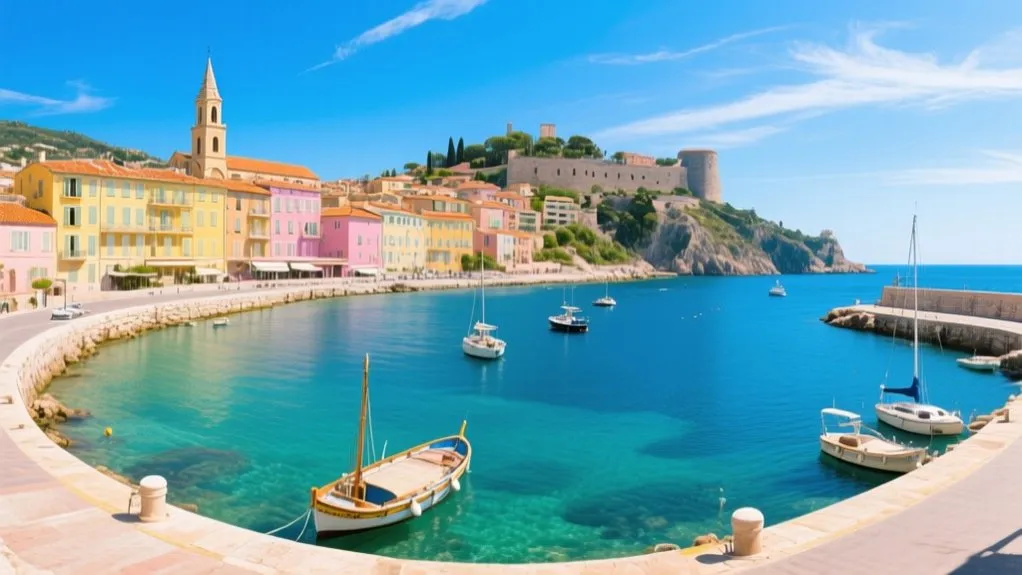
Your ship anchors offshore in the bay rather than docking at a pier, which means you’ll need to take a tender boat to reach land. This is standard for Villefranche, but it does eat into your time ashore, so you’ll need to think ahead about what you want to do.
Tendering works reasonably well during calm weather, though you’ll wait in queues both leaving the ship and getting back to it. Weather conditions matter considerably—rough seas can suspend tendering entirely, so check with the crew early in the morning and plan your day accordingly.
Once ashore, the town is compact enough that you can walk to the main areas without effort—the old quarter, the waterfront, the beaches are all accessible on foot. The absence of major tourist infrastructure means fewer chain outlets and aggressive tour hawkers, but also fewer facilities designed specifically for cruise passengers. The main waterfront gets crowded with ship visitors around midday during busy seasons, so timing your movements makes a real difference. Consider booking guided excursions at ports in advance to make the most of your limited time ashore.
Villefranche doesn’t have the dramatic geography or formal attractions that define other parts of the Côte d’Azur, and that’s actually why some travellers prefer it. The town has genuine character precisely because it hasn’t been restructured around tourism—ordinary life continues regardless of which ships are in port. Organised activities are limited, which means you’ll either explore independently or not at all, but that also means you’re likely to see what actually matters to the people who live here.
Getting From the Port to Town
The tender queue is where you’ll lose the most time, not the boat ride itself. Getting to the port early, before the rush builds, means you’ll skip an hour or more of waiting around. Once you’re actually on the water, it’s quick—you’ll be at the waterfront in minutes, positioned exactly where the old town starts.
Villefranche spreads out in a straightforward way that works in your favour. The main street hugs the harbour, and anything worth your time sits within walking distance in any direction. If you want to explore the hilltop areas or reach the beaches to the east, you can walk there without much trouble, though you’ll sacrifice the chance to sit and watch the crowds during the midday lull.
Buses run from near the waterfront if you’d rather not walk to more distant spots, though they’re optional for a basic port day. Taxis exist but charge more than the journey warrants for such short distances, which makes walking the sensible choice unless you’ve already paid for an organised tour that handles transport.
The real benefit of how Villefranche is laid out is that you can stop overthinking it. Leave the ship early and clear the tender queue before mid-morning, and you’ll have a solid stretch of free time before you need to return. That’s enough to actually see things, eat a proper meal, and sit down without rushing through everything on a list.
The Must-Do Experience: Start Here
The old town works because cruise ships haven’t overwhelmed it the way they have Nice or Monaco. Walk out from the tender, skip the souvenir stalls by the water, and head east along Quai Courbet toward the Chapelle Saint-Pierre, the old fishermen’s chapel. The interior murals are by Jean Cocteau, a local artist, and they’re straightforward work rather than the tourist-oriented pieces he made for bigger audiences elsewhere.
The narrow streets above the waterfront are where locals actually spend time, not spaces built for cruise passengers to photograph. They climb upward without any particular order, which means you’ll move slowly and actually absorb what’s around you. This part of Villefranche existed before tourists arrived, and it still functions that way.
An independent walking tour gives you actual context instead of random wandering through streets. Book one before you sail because local guides fill their schedules quickly during cruise season. You’ll see the 16th-century Citadel, understand the harbour’s strategic importance, and access areas outside the standard tourist circuit, which lets you plan your remaining time without rushing.
🗺️ Tours & Experiences at This Port
Skip the ship’s overpriced excursions — browse top-rated independent tours trusted by thousands of cruise passengers.
History Culture and the Top Sights
Villefranche’s history swings wildly depending on which century you’re reading about. The town changed hands between French and Italian control so frequently that survival meant staying invisible, which is why the architecture sits awkwardly between two influences rather than committing to either one.
The Citadel, a 16th-century fortress perched on the hill above the old town, carries most of the historical weight. It now houses the town hall and several museums, so you can actually walk the ramparts and see why this harbour mattered enough to fight over repeatedly. The Mediterranean spreads out below in a way that makes the strategic importance obvious.
An independent walking tour will get you into areas the standard route skips, though you’ll need to book ahead because guides fill up during cruise season. Jean Cocteau’s Chapel, the Chapelle Saint-Pierre, sits at the eastern end of the waterfront, easy to walk past if you’re not paying attention. The interior murals are deliberately restrained, quite different from his more elaborate work elsewhere, and the chapel functions as an actual local space rather than a visitor attraction.
The real history lives in the narrow streets climbing away from the port. They’ve stayed relatively unchanged because cruise tourism never industrialised here the way it did in neighbouring ports. Walking them slowly puts you in actual centuries of ordinary life rather than a sanitised recreation.
Beyond the Centre: Day Trips and Alternatives
The ship’s excursion to Eze and Monaco costs considerably more than going independently, and you’ll spend half your time on a coach while the tour operator pockets the difference. Your real advantage is time—you’ve got perhaps six or seven hours ashore, which is enough for one proper destination rather than a rushed double-header.
The independent approach works best here because local transport is straightforward and affordable. A train from Villefranche station reaches Monaco, or you can take the coastal bus route that winds through every fishing village between here and there. You’ll see far more of the actual Côte d’Azur this way, not filtered through a tour guide’s script.
The money you save on excursion markups—often the difference between moderate cost and greatly overpriced—buys you a proper lunch instead of a sandwich eaten standing up. If you want guidance without the full ship excursion, independent walking tours of Eze village book up quickly during cruise season, so reserve yours before your ship arrives. These operators keep groups small and actually know the back streets, which matters when you’re wandering a medieval hilltop village.
They cost a fraction of the price the ship charges while delivering genuinely local knowledge rather than surface-level commentary. The honest truth is you don’t need either option if you’re reasonably confident managing public transport and reading a map. But if you want expert company without paying cruise-ship premiums, booking an independent guide ahead saves both money and stress.
Either way, commit to one place and do it properly rather than racing between two while eating a disappointing pastry on a coach.
Shore Excursion or Going It Alone
The French Navy maintains Villefranche harbour as an active military anchorage, which means your ship will sometimes share the water with warships. Frigates and other vessels occasionally take priority over cruise ships for the best berths, so your tender queue might need to reshuffle when this happens. It’s not a problem—just a reality of the port rather than something to resent.
If you want to hire a private boat or water taxi, book it the evening before you arrive rather than gambling on walk-up availability. The locals know which operators actually show up and deliver what they promise, and the tourist information office by the harbour can recommend them without the cruise desk’s added commission. Your own research beforehand saves both money and frustration.
Staying within walking distance of the port will limit what you experience. The waterfront cafés exist primarily to charge tourists inflated prices for mediocre food, whereas the real restaurants and fishmongers operate five minutes inland where actual residents eat. The town is compact enough that wandering in any direction leads somewhere worth your time.
Download offline maps to your phone before you arrive because the port’s Wi-Fi connection is unreliable and asking for directions requires either French language skills or your willingness to mime. Learning to pronounce “excuse-moi” and “merci” correctly matters more than speaking perfect English—the French notice genuine effort and respond better to it. This small courtesy actually does open doors and prompt helpful answers.
🗺️ Tours & Experiences at This Port
Skip the ship’s overpriced excursions — browse top-rated independent tours trusted by thousands of cruise passengers.
Local Knowledge Worth Having Before You Dock
The cruise lines deliberately understate how close Nice is to Villefranche because admitting it would mean fewer passengers booking their expensive guided tours. You can reach the city centre in less time than the tendering process itself takes, which makes the ship excursions look rather poor value by comparison.
The locals use a mix of local buses and shared minibus services that operate on flexible routes—nothing like the rigid numbered systems you might know from home. Ask at the harbour information office for the current options rather than relying on outdated guidebooks or ship literature. The cost is a fraction of what you’ll pay for a tour operator’s equivalent journey.
Your best move is booking an independent walking tour of Nice’s Old Town in advance online. The popular morning slots fill quickly with cruise passengers, so securing your place before you sail saves both money and the stress of hoping something remains available when you arrive. These tours typically cost considerably less than ship-organised alternatives and deliver far better local knowledge.
If Nice feels too ambitious given your tender queue situation, Villefranche’s own neighbourhood rewards proper exploration. The Citadel sits within walking distance and offers views across the bay without the crowds that swamp the major Mediterranean resorts. The fishermen’s quarter inland has working boat repair yards and cafés where locals actually drink coffee, which tells you immediately whether the food is honest or inflated for passing visitors.
🗺️ Tours & Experiences at This Port
Skip the ship’s overpriced excursions — browse top-rated independent tours trusted by thousands of cruise passengers.
Your Port Day: A Sample Itinerary
The tendering queue tends to move faster than anticipated, leaving you with an actual decision: remain in port or make the journey elsewhere. Most cruise passengers squander their morning waiting for a tour bus.
Start in the fishermen’s quarter before the crowds arrive. Walk inland from the harbour past the working boat repair yards where locals maintain their vessels. Get coffee at one of the harborside cafés—the prices and quality will immediately tell you whether you’re paying fairly. This requires minimal time and almost no money.
By mid-morning, consider the Citadel if you’re staying local. The walk uphill is straightforward, and the views across the bay compensate for the effort. The fortress interior costs little to enter, and you’ll understand why locals prefer it to the overcrowded beaches below.
By lunchtime, your next move depends on your energy levels and the tender queues. If the queue appears reasonable, book an independent walking tour of Nice’s Old Town before the ship sails—these fill with cruise passengers quickly, and securing your place in advance matters. These tours cost substantially less than the ship’s equivalent and provide actual local knowledge rather than rehearsed commentary.
If Nice feels too demanding, eat lunch at a neighbourhood restaurant overlooking the water. Order what locals order, not what guidebooks recommend. Walk back to the harbour without hurrying, and you’ll have seen more genuine Villefranche in half a day than most cruise passengers see in a week.
🗺️ Tours & Experiences at This Port
Skip the ship’s overpriced excursions — browse top-rated independent tours trusted by thousands of cruise passengers.
Book your Villefranche day
Tours for this port, compare before you book
Getting around in port
✈️ Before you sail: eSIM, insurance, luggage, flight delays
Ships In Villefranche
Upcoming calls from our sailings tracker, updated regularly.
Norwegian Epic
Norwegian Cruise LineFri 30 Oct
⚓ 07:00–18:00
ms Oosterdam
Holland AmericaMon 2 Nov
⚓ 08:00–17:00
Celebrity Eclipse
Celebrity CruisesSat 7 Nov
⚓ 07:00–19:00
Celebrity Infinity
Celebrity CruisesThu 12 Nov
⚓ 07:00–18:00
Norwegian Prima
Norwegian Cruise LineMon 19 Apr
⚓ 09:00–19:00
ms Oosterdam
Holland AmericaSat 24 Apr
⚓ 10:00–19:00